
INFO HUB
Stainless Product Care
B&R stainless steel enclosures are designed to deliver reliable performance in harsh environments. Regular care and maintenance will help preserve their appearance, prevent surface contamination and maximise service life.
This guide provides practical advice on preventing tea staining, identifying surface discolouration and maintaining your enclosure for long-term performance.
What is tea staining?
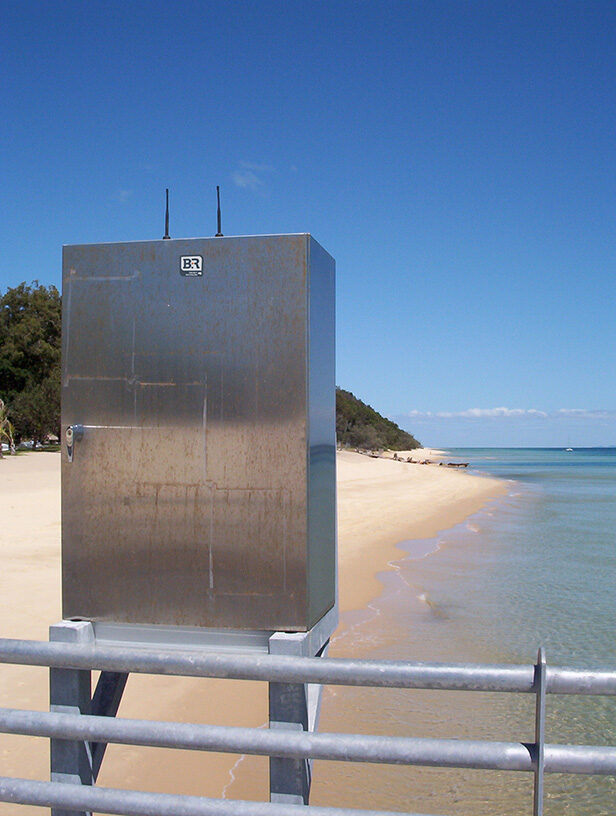
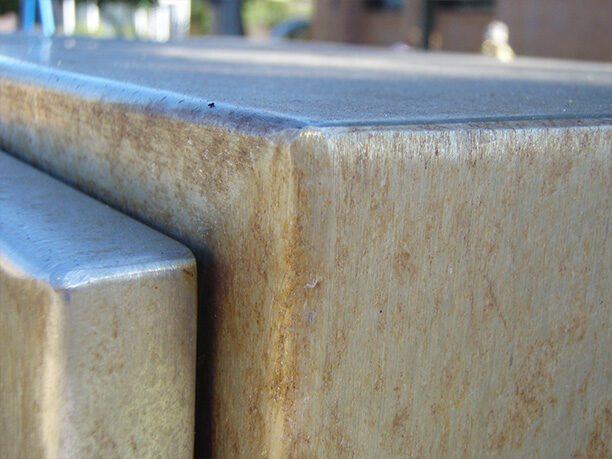
Tea staining is a surface discolouration of stainless steel caused by exposure to chlorides, commonly found in coastal areas or where saline water is present.

|
While it may affect the appearance of the enclosure, tea staining is not structural corrosion and does not affect its integrity or service life. |
What causes tea staining?

Chloride exposure
eg. coastal environments, salt water, washdown water

Surface finish
(rougher surfaces are more prone)

Salt build-up and evaporation cycles

Humidity & Temperature

Intermittent wetting
eg. sea spray
How to prevent tea staining
- Use the right material – Specify 316 stainless steel or higher for coastal and high-chloride environments.
- Choose a smooth finish – A No.4 finish (Ra ≤ 0.4 µm) provides improved performance.
- Clean regularly – Wash with fresh, clean water to remove salt deposits.
- Apply protective coatings if required – After cleaning, apply a suitable clear protective coating in severe environments.
Watch our practical guide to removing tea staining.
Key takeaways
Stainless steel is highly durable, but like any material exposed to harsh environments, it benefits from correct specification and routine maintenance.
With the right approach, your enclosure will maintain both its appearance and long-term performance.
- Stainless steel remains highly durable.
- Tea staining is cosmetic.
- Correct material selection and routine cleaning maximise service life
Still have questions?
Our team can help specify the right stainless
steel enclosure for your environment.